The Lapsed Sticker Surveillance State: License Plate Readers and the Administrative Traffic Stop

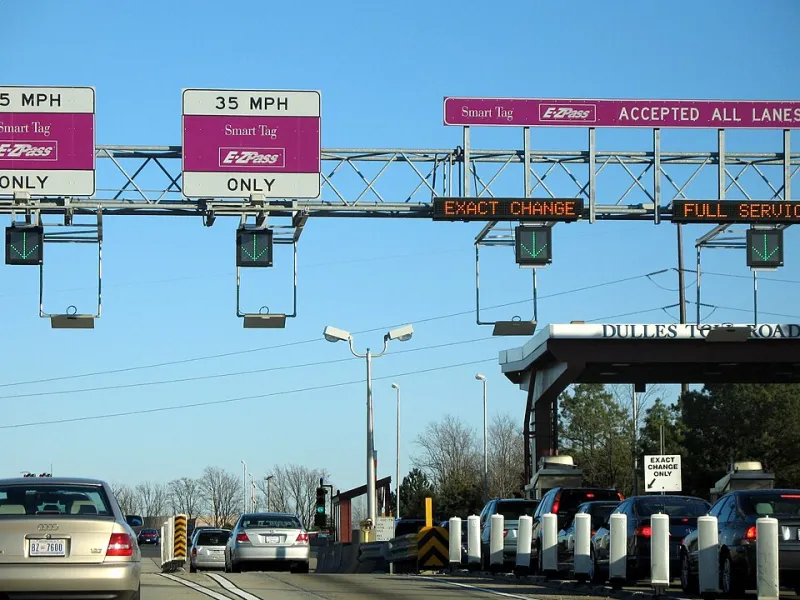
Photo: Manrat Thiusthas, CC BY-SA 4.0, via Wikimedia Commons
A registration sticker that expired nine days ago is, in the eyes of the law, a minor administrative failure. In the eyes of an automatic license plate reader (ALPR), it is a flag — a digital signal that a vehicle passing at highway speed may be stopped, questioned, and, in some jurisdictions, towed. A growing body of peer-reviewed scholarship suggests that this gap between the triviality of the offense and the severity of the enforcement encounter deserves far more scrutiny than it has received from policymakers.
From Passive Record to Active Warrant
Registration databases were once passive records, consulted only when an officer initiated a stop for some other reason. The proliferation of ALPR networks — mounted on patrol cars, fixed at intersections, and increasingly operated by private vendors that share data with law enforcement — has inverted that relationship. The database now initiates contact.
Studies of ALPR deployment document the scale of this shift. A single patrol vehicle equipped with a reader can scan thousands of plates per shift, and the hits that generate stops are overwhelmingly administrative: expired registrations, lapsed insurance records, unpaid parking obligations. Violent crime warrants account for a small fraction of alerts. The enforcement apparatus, in other words, is not primarily catching dangerous drivers. It is catching people who are behind on paperwork.
Where Stops Escalate, and for Whom
The peer-reviewed evidence on escalation is where the rights analysis becomes most urgent. Research on traffic enforcement consistently finds that stops originating from administrative violations — rather than observed dangerous driving — are disproportionately concentrated in lower-income neighborhoods and communities of color. Because registration lapses correlate with financial hardship, and because ALPR density is highest in urban areas with heavier policing, the same lapse in an affluent suburb may go unnoticed while producing a roadside encounter in a disinvested neighborhood.
Once a stop occurs, the driver's exposure multiplies. An expired sticker gives an officer lawful pretext to approach the vehicle, and everything that follows — questions about the driver's identity, immigration status, or outstanding obligations — flows from that initial administrative hit. Scholars studying pretextual stops have documented how these encounters can escalate into searches, arrests for unrelated matters, and, in the worst cases, violence. The administrative stop is the entry point to the entire enforcement funnel.
Registration Fees as a Movement Tax
The deeper structural question raised by this research is why registration is enforced through fines and vehicle immobilization at all. In most states, annual registration functions as a user fee funding road maintenance — a revenue mechanism. When nonpayment triggers police contact rather than, say, a tax collection process, the state has effectively deputized its revenue administration as a criminal-interdiction program.
This framing has consequences. A driver who cannot afford a $150 renewal does not stop needing to reach work, medical appointments, or school. The fine does not create the money; it creates the risk of police contact on every trip. Economists would call this a regressive tax with a probabilistic enforcement penalty attached. Rights scholars would call it a constraint on freedom of movement that falls hardest on those least able to pay — a pattern familiar from litigation over fines-and-fees systems in states such as Missouri, Alabama, and Washington.
Reform Pathways Supported by the Evidence
The research literature points toward several measurable reforms. States including California and Virginia have already restricted stops for certain secondary administrative violations, and early evaluations suggest such limits can reduce enforcement disparities without measurable effects on traffic safety. Decoupling registration renewal from non-safety debt, adopting pure fee-based collection for lapsed registrations, and requiring judicial oversight of ALPR data retention would each address a distinct node in the escalation pipeline.
None of these reforms requires sacrificing legitimate safety objectives. Dangerous driving remains observable and enforceable through conventional means. What is being reconsidered is the use of pervasive surveillance infrastructure to enforce revenue collection through roadside police contact.
For a journal concerned with the intersection of mobility and human rights, the registration database presents a clean case study: a routine civic obligation, mediated by automated surveillance, that converts poverty into police exposure. The evidence base is mature enough for legislators to act. The question is whether they will treat a lapsed sticker as what it is — a paperwork problem — rather than as a pretext.