Electric Highways, Divided Nation: Charging Infrastructure and the Right to Move
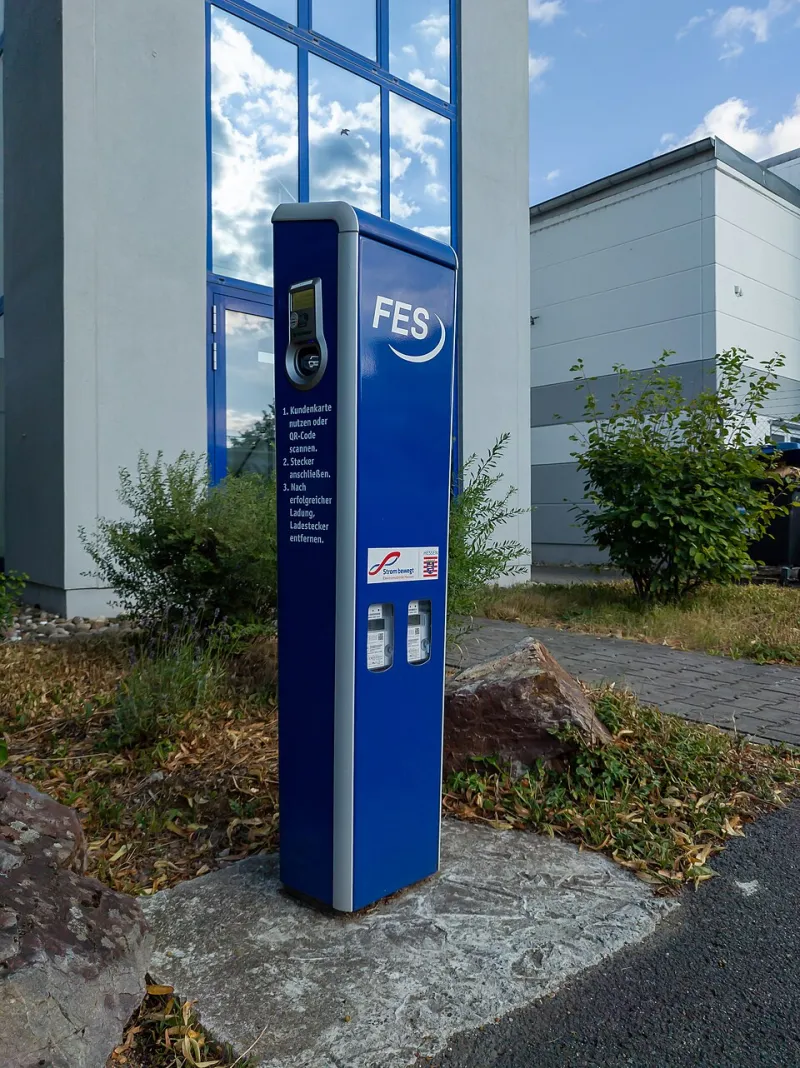
Photo: Matti Blume, CC BY-SA 4.0, via Wikimedia Commons
The internal combustion engine promised, at least in principle, that any American with a driver's license and a full tank could cross the continent. The electric vehicle, lauded as the centerpiece of decarbonization policy, is quietly renegotiating that promise. Emerging peer-reviewed cartography of charging infrastructure reveals a landscape that mirrors older inequities in transit access: dense networks along wealthy metropolitan corridors, and vast, unpowered stretches elsewhere.
What the Mapping Studies Actually Show
Spatial analyses published in recent transportation and energy journals converge on a consistent finding. Public Level 2 and DC fast chargers are disproportionately located in census tracts with higher median incomes, higher rates of educational attainment, and predominantly white populations. Counties in the rural South, Appalachia, and parts of the Mountain West frequently register only a handful of accessible fast chargers across hundreds of miles.
Researchers describe these gaps as "charging deserts," a term borrowed deliberately from the food access literature. The parallel is instructive. In both cases, market forces alone concentrate a necessity where purchasing power is highest, and both cases impose the steepest costs on those who can least absorb them: residents of low-income and rural areas for whom a vehicle is not a lifestyle accessory but the precondition of employment, medical care, and family life.
Mobility as a Gatekept Good
The human rights framing requires little translation. If participation in economic and civic life depends on physical movement, then the infrastructure of movement cannot be treated as a luxury amenity. A household that cannot reliably charge a vehicle cannot participate in the electric transition, and as states adopt zero-emission vehicle mandates and phase out new gasoline sales, the exclusion compounds. The used EV market will not rescue these communities if the places they live lack the wiring to sustain ownership.
There is also a second-order effect documented in the literature: charging deserts suppress EV adoption in exactly the places where vehicle miles traveled are longest and emissions per driver are highest. The equity problem and the climate problem are, on the available evidence, the same problem.
Evaluating the Policy Toolkit
Federal interventions, chiefly the National Electric Vehicle Infrastructure (NEVI) formula grants, direct funding toward designated highway corridors with the stated goal of building out long-distance routes. Corridor-first strategies are defensible on network grounds, but peer-reviewed assessments caution that they can reproduce the very geography under critique: chargers appear along interstates while the interior counties between them remain unserved.
Utility-level mandates offer a complementary path. Several state public utility commissions have approved make-ready programs that shift infrastructure costs onto ratepayer-funded investment, reducing the upfront burden on private operators in low-margin markets. The distributional question—who pays, and who benefits from grid upgrades—is a live one, and researchers argue that equity-weighted siting criteria should be written into program design rather than treated as an afterthought.
Justice40-style frameworks, which direct a share of clean energy investment toward disadvantaged communities, represent the most explicit rights-based instrument in the current federal repertoire. Their effectiveness, however, depends on the quality of the underlying data—precisely the statistical blind spots that mobility researchers have documented elsewhere.
A Research Agenda for Policymakers
Three gaps deserve scholarly attention. First, most studies measure charger counts, not functional access; uptime, pricing, and payment-method restrictions all mediate whether a charger on a map is a charger in practice. Second, renters in multifamily housing face a distinct barrier—no outlet of one's own—that public infrastructure alone cannot solve. Third, longitudinal work is needed to determine whether early siting disparities narrow or calcify as adoption matures.
The transition to electric mobility is often narrated as a technological inevitability. The empirical record suggests otherwise: it is a policy choice about whose movement gets prioritized, and it will be judged, ultimately, by whether the right to travel survives the change of engine.