Discharged to the Curb: When Hospital Planning Assumes a Ride That Does Not Exist

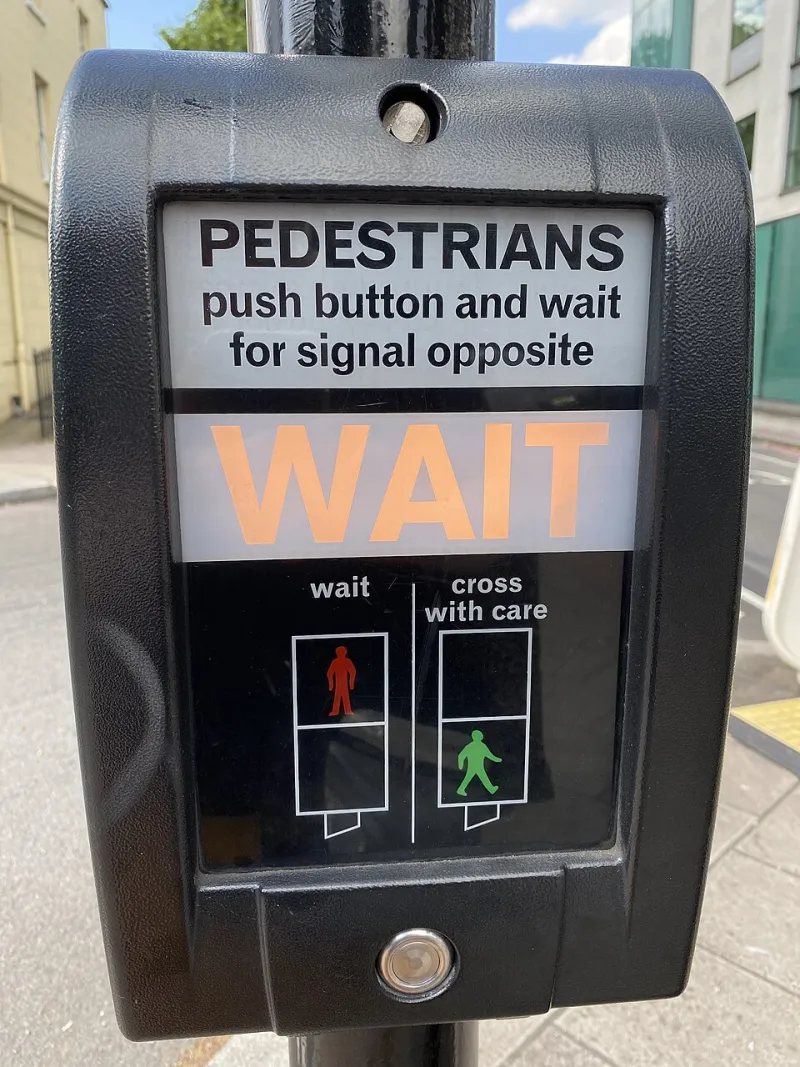
Photo: Downtowngal, CC BY-SA 4.0, via Wikimedia Commons
Every year, millions of American patients are discharged from hospitals with written instructions they may never be able to follow. The discharge summary might specify a follow-up appointment in seven days, a cardiac rehabilitation schedule, or a pharmacy pickup across town. What these plans frequently omit is the practical question on which all of them depend: how, exactly, will the patient get there?
A growing body of peer-reviewed literature suggests that this omission is not an oversight but an assumption — one embedded in the administrative architecture of American healthcare. Discharge planning, as practiced in most facilities, implicitly presumes reliable personal transportation. For the roughly one in ten US households without access to a vehicle, and for the far larger share of patients whose conditions, incomes, or insurance status make travel to appointments burdensome, that presumption quietly converts a structural barrier into an individual moral failing.
The 'No-Show' as a Data Problem
The most consequential artifact of this assumption is the missed-appointment label. In hospital scheduling systems, a patient who fails to appear for post-discharge follow-up is recorded as a no-show — a designation that carries connotations of noncompliance and, in some institutions, triggers warnings in the medical record or even discharge from a practice.
Research on appointment nonattendance, however, consistently identifies transportation difficulty as one of the leading modifiable predictors of missed visits, alongside cost and scheduling conflicts. Studies of Medicaid populations and safety-net hospitals repeatedly find that no-show rates cluster along geographic and economic lines, with travel time and vehicle access emerging as significant independent variables. In other words, a substantial portion of what clinicians read as patient noncompliance is better understood as a mobility outcome — the predictable result of asking someone without a ride to travel fifteen miles for a twenty-minute appointment.
The consequences compound. Missed post-discharge follow-up is associated with higher readmission rates, and readmissions within thirty days are both clinically dangerous and financially penalized under Medicare's Hospital Readmissions Reduction Program. A hospital may therefore absorb financial penalties for a failure that its own discharge protocols helped produce.
Where the System Breaks
Several structural features of American healthcare conspire to make the discharge-to-curb problem durable.
First, reimbursement logic. Hospitals are paid for episodes of care, not for the logistics that make care continuous. Time spent arranging a patient's ride home or to a follow-up visit generates no revenue, so it is structurally deprioritized even where staff recognize its importance.
Second, fragmented coverage of non-emergency medical transportation (NEMT). Medicaid beneficiaries in many states are entitled to NEMT benefits, but utilization remains low — studies point to cumbersome booking systems, limited advance-notice requirements, and low awareness among both patients and discharge staff. Medicare, by contrast, covers NEMT only in narrow circumstances, leaving a large elderly and disabled population with few subsidized options outside of ambulance transport, which is reserved for emergencies.
Third, geography. Rural patients may face round trips of sixty miles or more to reach the nearest specialist. For this population, the discharge plan that ends at the curb is not merely inconvenient; it is often unexecutable.
From Charity to Entitlement
Some health systems have begun piloting interventions that treat transportation as part of the care plan rather than an afterthought. Programs that embed transit navigators in discharge teams — staff who arrange rides, screen patients for transportation insecurity using validated instruments, and coordinate with NEMT brokers or community providers — have shown promise in reducing missed follow-up appointments and, in some evaluations, readmissions.
The framing of these programs matters, however. When transportation assistance is described as charity or 'wraparound service,' it remains discretionary, vulnerable to budget cycles, and dependent on institutional goodwill. The peer-reviewed literature supports a different framing: if a discharge plan is clinically ineffective without transportation, then arranging transportation is not an amenity but a component of the standard of care. A patient's ability to leave the hospital safely and reappear for necessary follow-up is part of what the admission was supposed to accomplish.
This reframing has policy implications. State Medicaid agencies could simplify NEMT access at the point of discharge, treating ride arrangement as a discharge checklist item with the same standing as medication reconciliation. Accrediting bodies could incorporate transportation screening into discharge planning standards. And health systems could be evaluated — through readmission metrics they already face — on whether their discharge processes account for mobility barriers rather than assuming them away.
A Research Agenda
Significant gaps remain. Few studies disaggregate transportation-related missed appointments by diagnosis, race, or rurality with the granularity needed to guide intervention design. Screening instruments for transportation insecurity are not uniformly deployed, and the label 'no-show' persists in datasets that researchers then analyze as though it were a behavioral variable rather than a confounded one.
For scholars of human rights and mobility, the hospital discharge offers a compact case study in how institutional routines can quietly redistribute freedom of movement. The patient wheeled to the curb with a folder of instructions has formally been released; whether she can actually reach the care she needs is a question the system has chosen not to ask. The evidence reviewed here suggests it is time the question was asked — systematically, in the data, and explicitly, in policy.