The Boarding Pass Problem: How a State License Suspension Can Ground an Air Traveler
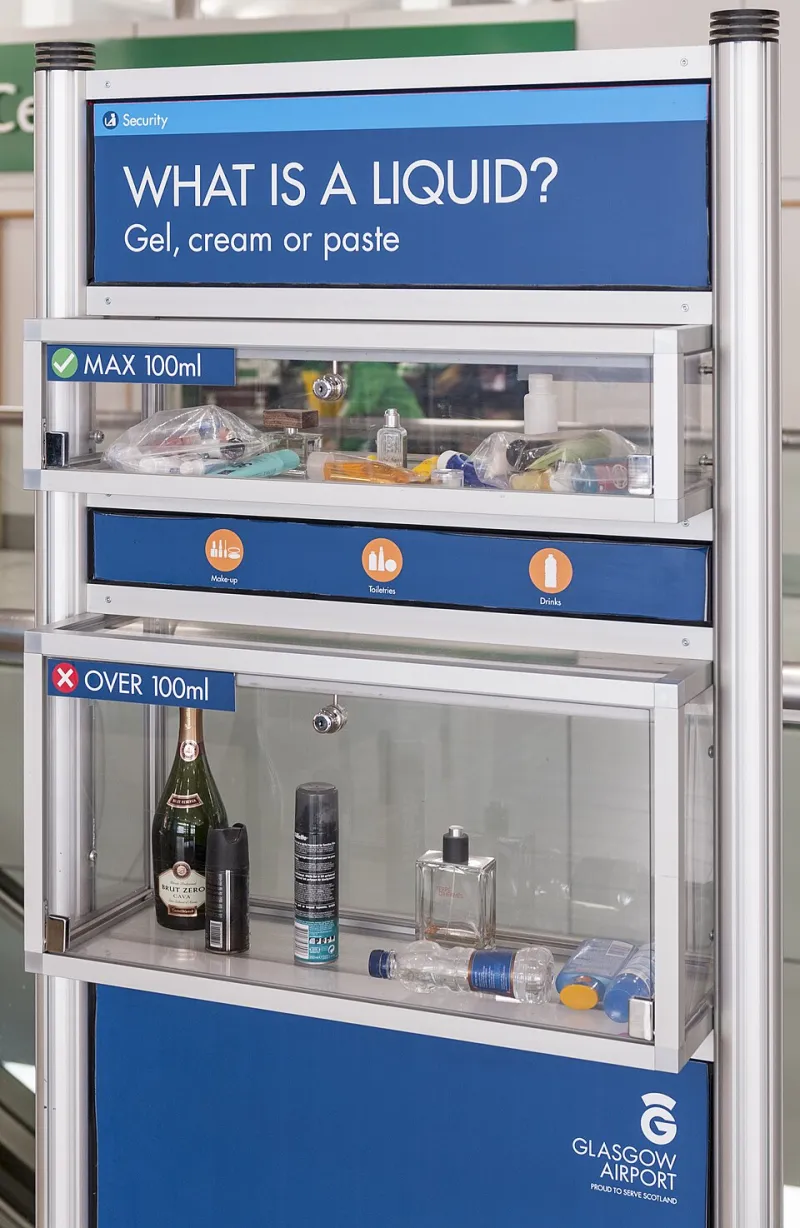
Photo: Ralf Roletschek, GFDL 1.2, via Wikimedia Commons
A Sanction That Outgrew the Road
When a state department of motor vehicles suspends a driver's license, the sanction is nominally confined to the operation of a motor vehicle. Yet a growing body of peer-reviewed scholarship suggests the practical reach of a suspension extends well beyond the shoulder of the highway. For many American travelers, the state-issued license is also the identification document presented at the Transportation Security Administration checkpoint. When that document is suspended, surrendered, or flagged, the consequence may not be a lost driving privilege but a lost flight.
This article reviews the emerging research on identification-based mobility restriction and asks whether states are, intentionally or not, leveraging identification systems to restrict movement across a second mode of transportation — one never contemplated in the administrative orders that imposed the sanction.
The Data Pipeline Between the DMV and the Departure Gate
The mechanism is administrative rather than statutory. Under the REAL ID framework, federal standards tie airport-acceptable identification to state credentialing systems. State DMVs, in turn, participate in interstate data-sharing compacts that transmit suspension and revocation status across jurisdictional lines. Research published in transportation policy journals has documented how these interoperable databases were designed to prevent license stacking — the practice of obtaining credentials in multiple states — but have produced a secondary effect: a suspension in one state can render an individual effectively uncredentialed everywhere.
Because TSA verification systems draw on state credential status, a traveler whose license is suspended may arrive at the airport with a physical card that no longer validates. The result, scholars note, is a de facto no-fly event initiated by an agency and a proceeding that had nothing to do with aviation.
What the Research Shows
Several strands of peer-reviewed work converge on this problem. Studies of court debt and license suspension have long documented that a majority of suspensions in many states are imposed for non-safety-related causes, including unpaid fines and failure to appear at administrative hearings. A second literature, focused on REAL ID implementation, has tracked the compliance gap: the millions of Americans who lack federally acceptable identification, disproportionately low-income travelers, and residents of states that resisted early REAL ID adoption.
The intersection is where the rights concern emerges. An individual suspended for an unpaid parking citation — a civil debt, not a demonstrated danger behind the wheel — may find that the same administrative act has compromised both driving and flying. Empirical audits of administrative adjudication suggest these individuals are rarely notified that their identification, not merely their driving privilege, is in jeopardy.
The Due Process Gap at the Checkpoint
Administrative law offers a framework for evaluating this arrangement. The Supreme Court's precedent on license suspension, including Bell v. Burson, establishes that a driver's license is a form of property or liberty interest that cannot be revoked without notice and an opportunity to be heard. But that doctrine developed when a license was a license. It did not anticipate a credentialing architecture in which the same document governs access to multiple modes of interstate travel.
Three gaps recur in the literature:
- Notice deficits. Suspension orders typically reference driving privileges and say nothing about downstream identification effects, leaving travelers to discover the consequence at the gate.
- Forum mismatch. A traveler contesting a suspension may do so before a state DMV hearing officer, while the operative restriction — the federal identification standard — is administered by an entirely separate agency with no direct hearing mechanism.
- Proportionality. Non-safety suspensions impose travel restrictions that appear disconnected from the conduct that triggered them, a mismatch that proportionality analysis in administrative law is designed to catch.
Federalism in the Gray Zone
Defenders of the current system argue that states suspend credentials, not identification, and that federal standards merely verify authenticity. But researchers studying cooperative federalism have observed that this division of labor produces what one might call diffusion of responsibility: no single agency owns the mobility consequence, and therefore no agency is accountable for it.
This gray zone is precisely where rights-based analysis is most needed. When the practical effect of a state sanction is to restrict interstate air travel — a liberty interest with constitutional roots in the right to travel doctrine — the absence of a clear procedural pathway is not a technical footnote. It is the finding.
Toward a Rights-Compatible Credentialing System
The policy literature points to several feasible reforms. States could decouple identification validity from driving privilege, issuing a compliant identification card to suspended drivers so that the sanction targets the road, not the traveler. Suspension notices could carry plain-language warnings about downstream identification effects. And federal standards could incorporate a hardship review, similar to the occupational licenses many states already offer for work-related driving.
None of these reforms would compromise safety enforcement. Each would restore a basic principle: that the punishment imposed should be the punishment intended, and that the boarding gate should not become a checkpoint for debts and dockets it was never designed to police.