The Winter Suspension: Snow Removal Policy and the Seasonal Revocation of Sidewalk Access
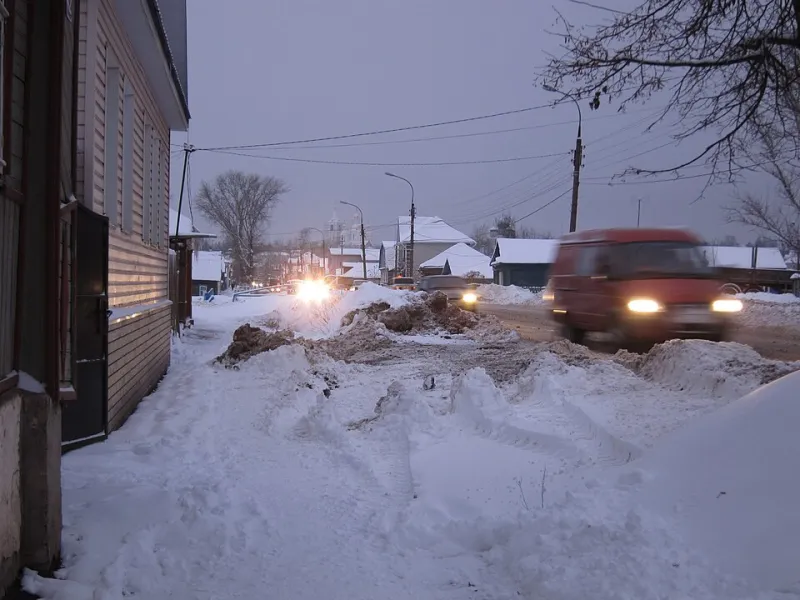
Photo: James Ryen, CC BY 3.0, via Wikimedia Commons
A sidewalk is not a seasonal amenity. Under Title II of the Americans with Disabilities Act, public entities must ensure that their programs, services, and activities are accessible, and the pedestrian network is part of that obligation. Yet in many American cities, the first substantial snowfall produces a quiet suspension of that guarantee. Curbs are buried, ramps disappear, and a route that was passable in October becomes an obstacle course in January. The snow is routine. The suspension is a policy choice.
A Guarantee With a Season
The seasonal geography of disability is rarely captured in civil rights reporting. A wheelchair user who cannot reach a bus stop after a storm is not experiencing a random inconvenience; she is experiencing the interaction of municipal budgeting, property-law liability, and enforcement discretion. Each of those variables is within public control. Together, they determine whether a city treats snow clearance as a public service or as a private responsibility with public consequences.
Most cold-weather municipalities divide sidewalk clearing between public crews and adjacent property owners. Some cities clear sidewalks on major routes and leave residential sidewalks to homeowners or landlords. Others require property owners to clear within a set number of hours after snowfall, with fines for noncompliance. A smaller number treat sidewalk clearing as a public function funded through general revenue. These rules are not merely administrative. They allocate the cost of accessibility and decide who bears the risk of nonperformance.
Who Clears, Who Pays, Who Enforces
The property-owner model is attractive to municipalities because it shifts labor and liability to private parties. Its weakness is predictable. Clearing obligations are unevenly enforced, and enforcement often depends on complaints. A tenant may not know the rule, an absentee landlord may ignore it, and an elderly homeowner may be physically unable to comply. The result is a patchwork of cleared and uncleared frontage that is especially hazardous at corners, bus stops, and curb ramps, where pedestrians must cross from one property's responsibility to another's.
The public-crew model is more reliable on designated routes, but it is vulnerable to budget cycles. Snow removal competes with other winter operations, and sidewalk clearing is often the first item reduced when overtime costs rise. A city may clear arterial roads for emergency vehicles while leaving the sidewalk beside them impassable. That hierarchy is understandable as an operational matter, but it is not neutral from a disability-rights perspective. It prioritizes vehicle movement over pedestrian access and, in doing so, determines who can leave home after a storm.
Title II and the Problem of Discretion
Title II of the ADA does not require municipalities to guarantee perfect sidewalk conditions in every storm. It does require them to administer services without disability discrimination and to make reasonable modifications when necessary. The legal question is not whether snow is an act of nature, but whether a city's clearance policies and enforcement practices create a disparate burden on people with disabilities. A policy that leaves curb ramps buried for days while adjacent streets are plowed raises that question directly.
Enforcement is the weak link. Civil rights complaints about snow-blocked sidewalks are difficult to pursue because the condition is temporary and the responsible party is often unclear. A wheelchair user may file a complaint with the city, only to be told that the property owner is responsible. The property owner may be cited, but the citation may arrive after the snow has melted. By the time the administrative process moves, the harm has already occurred and the evidence has disappeared.
A more effective policy framework would combine three elements. First, municipalities should map and publish priority pedestrian routes, including routes to transit, hospitals, schools, and government offices. Second, they should fund sidewalk clearing on those routes as a public service, rather than relying solely on adjacent owners. Third, they should create a rapid-response complaint mechanism that triggers inspection and interim clearance, not just a fine. These measures would not eliminate winter. They would prevent winter from becoming an annual suspension of access.
Budgeting for Access, Not Just Plowing
The fiscal case for reform is stronger than it may appear. Unclear sidewalks increase falls, emergency-room visits, and missed medical appointments. They also reduce labor-force participation for people with mobility disabilities and raise the cost of home care when aides cannot reach a client. These costs are dispersed across health care, social services, and private households, which is why they are rarely counted in snow-removal budgets. A rights-based budget analysis would count them.
Cities that have moved toward public clearing on priority routes have found that the cost is manageable when it is planned as part of winter operations rather than treated as an emergency add-on. The key is to define access as a service standard, not a discretionary favor. Snow removal is already a public function. The question is whether pedestrian access is included in the definition of the public to be served.
For policymakers, the winter sidewalk is a test of whether ADA compliance is understood as a year-round obligation or a fair-weather promise. The snow will come. The suspension does not have to.