A State-by-State Scorecard on License Access: Grading the Systems That Govern Immigrant Mobility
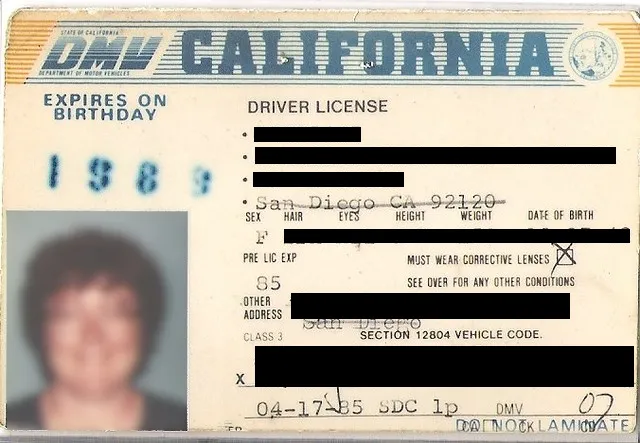
Photo: Californian DMV., Public domain, via Wikimedia Commons
Comparative policy analysis lives or dies by the quality of its measurement. When the subject is driver's license access for undocumented residents — a policy area spanning more than a dozen states and two decades of legislative experimentation — the need for a defensible scoring instrument becomes acute. This article outlines the rubric we use at IJHR Mobility Review and demonstrates its application to five states selected for maximal policy contrast.
Why a Rubric, Not a Ranking
Binary classifications (a state "allows" or "denies" access) obscure the operational realities that determine whether a license is usable in daily life. A state may authorize licenses for residents regardless of status while imposing documentation requirements so onerous that uptake remains negligible. Our instrument therefore scores policies on five indicators, each rated on a 0–2 scale:
- Legal authorization — does statute permit issuance without lawful presence verification?
- Documentation burden — how many alternative documents are accepted, and are foreign-issued records admissible?
- Marked status — does the credential carry a visual designation distinguishing it from a standard license?
- Federal interoperability — is the credential REAL ID-compliant, non-compliant, or bifurcated?
- Enforcement insulation — do state laws limit information-sharing with federal immigration authorities?
Scores are summed for a maximum of 10. We deliberately exclude uptake rates from the rubric itself; participation data are confounded by fear, cost, and awareness, and conflating them with statutory generosity would penalize states twice.
Applying the Instrument
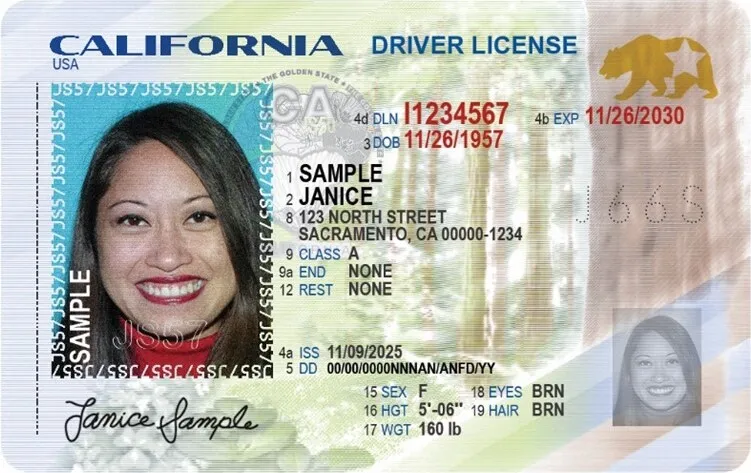
California (score: 9). AB 60 licenses, available since 2015, require no status verification and cannot share data with federal immigration authorities. The primary deduction comes from the distinct visual marking of the credential, which advocates argue creates a signaling risk during traffic stops.
New York (score: 8). The Green Light Act of 2019 authorizes standard licenses regardless of status and restricts record disclosure. Points are deducted for a bifurcated system: applicants may inadvertently pursue a REAL ID they cannot obtain, and documentation requirements for foreign passports and consular cards have generated administrative friction.
Illinois (score: 8). A long-standing law permits issuance without status verification, and the state's enforcement-insulation provisions are comparatively strong. Deductions reflect a temporary suspension of new applications during federal REAL ID litigation, illustrating how intergovernmental conflict can destabilize access.
Texas (score: 2). Statute requires proof of lawful presence, and no alternative credential exists. The minimal score reflects only the theoretical availability of licenses to lawfully present residents — a reminder that the rubric's floor is not zero.
New Mexico (score: 10). The only state in our sample to retain universal licensing continuously since 2003, New Mexico accepts a broad documentation menu, issues unmarked credentials, and maintains statutory data-sharing limits. Its longevity offers researchers an unusually long panel for studying uptake, insurance rates, and enforcement outcomes.
Methodological Caveats
Three limitations warrant emphasis. First, statutes change; any scorecard requires dated versioning and sunset review. Second, indicator four involves contested federal policy — REAL ID enforcement timelines have shifted repeatedly, and scores should be updated accordingly. Third, our instrument measures statutory generosity, not realized mobility. Pairing it with administrative data on insurance coverage, crash rates, and traffic-stop outcomes is the necessary next step for causal inference.
Implications for Research Design
The five-state application demonstrates the rubric's core virtue: it separates what a law says from what a law does. Scholars building panel datasets on immigrant mobility should treat the indicators as modular, allowing substitution of state-specific covariates without abandoning comparability. For policymakers, the instrument makes visible the trade-offs — particularly around credential marking and data sharing — that binary debates tend to flatten.