Court Debt on Wheels: The Research Case Against License Suspensions for Unpaid Fines
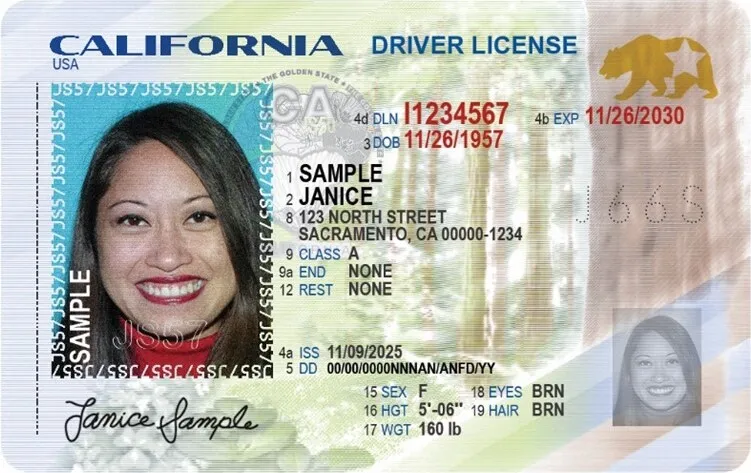
Photo: California Department of Motor Vehicles, Public domain, via Wikimedia Commons
In most American states, an unpaid traffic ticket can cost a driver their license — not because of dangerous driving, but because of a debt. Estimates suggest that millions of suspensions for nonpayment-related reasons are issued annually, making court-debt-based suspension among the most frequently imposed sanctions in the US legal system. A growing body of peer-reviewed research now subjects this practice to empirical scrutiny, and the findings are difficult for policymakers to ignore.
Finding 1: Suspension Concentrates Among Those Least Able to Pay
Research consistently shows that suspensions for unpaid fines function as a regressive penalty. Studies in Washington State, Virginia, and New Jersey have found that suspension rates correlate strongly with indicators of economic distress — county poverty rates, unemployment, and racial demographics — even after controlling for underlying driving behavior. Because suspension typically triggers additional reinstatement fees, the research documents a compounding cycle: the debt that triggered the suspension grows larger the longer it remains unpaid.
Finding 2: The Collections Rationale Fails Empirically
Defenders of the practice have long argued that suspension incentivizes payment. The evidence suggests otherwise. Analyses of state collections data, including a widely cited study of Texas's Omnibase program, found that suspension for nonpayment recovers only a small fraction of outstanding debt while pushing many debtors into complete nonpayment. When North Carolina and other states restricted debt-based suspensions, collections did not collapse; in several cases, payment rates rose as drivers regained the ability to work and pay.
Finding 3: Suspended Licenses Reduce Employment and Earnings
Perhaps the most robust finding concerns labor markets. Research exploiting variation in suspension policy has found that license suspension reduces employment probability and earnings, with effects concentrated in occupations requiring driving or in regions with limited public transit. For workers in construction, delivery, home health, and gig-economy roles, a license is a condition of employment. Studies have estimated substantial earnings losses per suspension — losses that also reduce tax revenue and increase reliance on public assistance.
Finding 4: Public Safety Gains Are Minimal
The stated public safety rationale — keeping unsafe drivers off the road — applies to suspensions for dangerous driving, not nonpayment of debt. Peer-reviewed evaluations, including research examining reforms in states like Mississippi, which eliminated most debt-based suspensions in 2021, found no measurable increase in crash rates following reform. Meanwhile, studies document a counterproductive effect: unlicensed drivers whose licenses were suspended for debt drive anyway, often without insurance, because in car-dependent regions the alternative to driving is often the loss of a job.
Finding 5: Reform Is Spreading — and the Evidence on Outcomes Is Encouraging
Since 2019, more than a dozen states have curtailed or eliminated license suspensions for unpaid fines and fees, including Virginia, California, Montana, Idaho, and Oregon. Early empirical assessments of these reforms show increases in license reinstatement, improvements in insurance coverage rates, and, in several jurisdictions, higher rates of fine repayment — consistent with the hypothesis that restoring mobility restores the capacity to pay.
A Mobility Rights Framing
The human rights dimension of this research deserves explicit attention. Mobility is a precondition for exercising many other rights: the right to work, to housing, to family life, and to equal treatment before the courts. When a civil debt — often arising from minor infractions — triggers a sanction that jeopardizes employment, the practice raises questions under principles of proportionality and non-discrimination that US courts and inter-American human rights bodies have both examined.
The peer-reviewed literature does not settle every question. Longitudinal data on reform outcomes remain limited, and enforcement of insurance requirements among previously unlicensed drivers warrants continued study. But the direction of the evidence is consistent: debt-based suspension collects little, harms much, and its abolition has not produced the public safety consequences its defenders predicted.
For state legislators weighing reform, the findings suggest a straightforward conclusion drawn from the research itself: restoring mobility to debtors is not leniency. It is a policy that performs better on its own terms — collections, compliance, and safety — than the practice it replaces.