Prescribed to Stay Home: Medicaid's In-Home Rule and the Geography of the Power Wheelchair
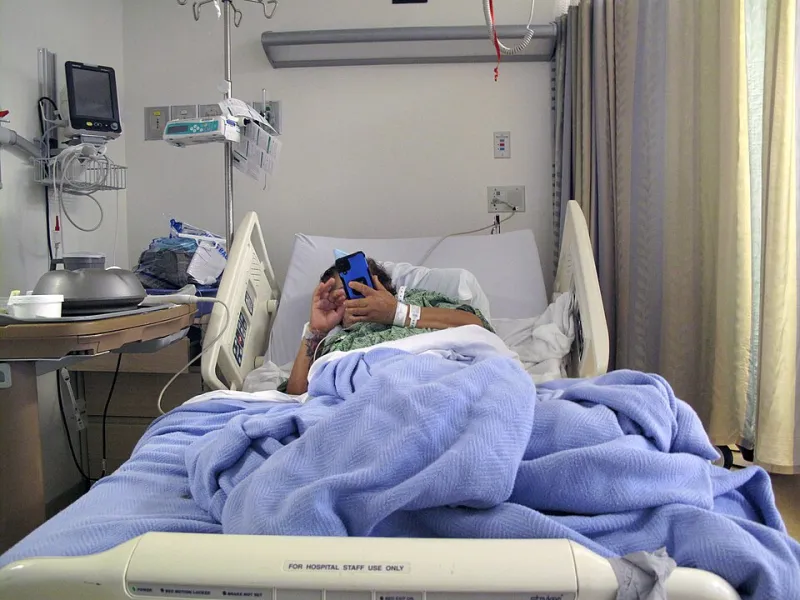
Photo: Nick Yudin, CC BY-SA 4.0, via Wikimedia Commons
When Congress created the durable medical equipment benefit that eventually became the backbone of Medicaid assistive technology coverage, few policymakers imagined that the phrase "in-home use only" would become one of the most consequential mobility restrictions in American public health law. Yet a growing body of peer-reviewed research indicates that this single administrative classification shapes where hundreds of thousands of disabled Medicaid recipients can physically go — and, by extension, what they can do with their lives.
The Architecture of Confinement
Under Medicaid's durable medical equipment rules, power wheelchairs and scooters are typically reimbursed only when a physician certifies that the device is necessary for mobility within the recipient's residence. Outdoor terrain, sidewalks, public transit platforms, and workplace interiors fall outside the coverage logic entirely. The result is not a defect in the equipment; it is a defect in the definition.
Empirical studies of equipment access have documented what users report anecdotally: devices approved under in-home criteria are frequently lighter-duty, less maneuverable outdoors, and slower to arrive. Prior authorization — the process by which state agencies review every equipment request before approval — adds median delays measured in weeks to months. For a person whose condition is progressive, a four-month wait can mean losing the ability to ambulate before the chair arrives, and then receiving a device prescribed for the person they were at intake rather than the person they have become.
What the Research Shows
Scholarship published across rehabilitation and health policy journals converges on three findings. First, equipment delays correlate with measurable declines in community participation: employment, medical appointment attendance, and social contact all fall during authorization lags. Second, reimbursement caps push prescribers toward the least capable device that satisfies the paperwork, a phenomenon researchers describe as prescribing to the fee schedule rather than the patient. Third, users of in-home-restricted devices report significantly higher rates of isolation and unmet transportation need than users of community-capable equipment, even after controlling for diagnosis and income.
Read together, these findings support a conclusion that is uncomfortable for program administrators: a benefit designed to restore function may, in practice, function as a restriction of movement. The wheelchair that works only inside the house is a wheelchair that defines the house as the boundary of the user's world.
A Benefit That Restricts Is a Policy Choice
The in-home rule is not a medical judgment. No clinician believes a person's need for mobility ends at the front door. It is a fiscal classification, inherited from Medicare's original statutory language and replicated across state Medicaid plans, that prices movement outside the home as a luxury. But the distinction between indoor and outdoor mobility is increasingly untenable in a rights framework.
The Americans with Disabilities Act established that community integration is a civil right, a principle reinforced by the Supreme Court's Olmstead decision. Federal disability policy simultaneously promises integration and pays for equipment that makes integration impossible. This contradiction deserves the same scrutiny applied to other administrative barriers this journal has documented — from license suspensions that ground air travelers to parole zones that shrink labor markets. Mobility restrictions embedded in benefit design are no less restrictive for being administered by health agencies rather than courts.
Toward a Rights-Based Coverage Standard
Reform proposals circulating in disability policy circles suggest a coherent alternative. Coverage determinations should be anchored to the destinations of a recipient's life — work, worship, commerce, care — rather than to the square footage of a residence. Prior authorization timelines should carry statutory maximums, with automatic approval for devices replacing comparable equipment. And device tiers should be matched to community infrastructure, recognizing that a chair adequate for a carpeted apartment may be inadequate for the broken sidewalks of a Rust Belt city or the winters of a northern plains state.
Some states have begun experimenting with community-use criteria and expedited replacement pathways, offering a natural experiment for researchers. The evidence base should be built out accordingly: longitudinal studies comparing integration outcomes under in-home versus community-based coverage standards would give policymakers the peer-reviewed grounding they currently lack.
The Measure of the Benefit
Assistive mobility coverage should be evaluated by a simple metric: how far does it let a person go? By that measure, the current system underperforms not because devices fail but because policy defines success as movement within four walls. A benefit that prescribes confinement is not a health benefit at all — it is a boundary drawn in paperwork, and it should be redrawn.