Language as a License Requirement: Measuring the Hidden Barrier in Driver Credentialing
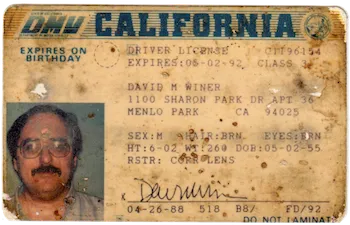
Photo: Californian DMV., Public domain, via Wikimedia Commons
Driver licensing is usually evaluated as a road-safety function: does the applicant know the rules, recognize the signs, and operate the vehicle safely? That framing is necessary but incomplete. For immigrant communities, the licensing office is also an administrative gate, and the language in which that gate is conducted can determine whether a person reaches work, school, medical care, or a court date. The research problem is not that language access is absent from policy debate. It is that language access is rarely measured with the rigor applied to other licensing variables.
The Data Gap Beneath the Road Test
Most state driver licensing agencies publish pass rates, wait times, and appointment availability. Far fewer publish the language of the written examination, the availability of translated manuals, the presence of interpreters at counters, or the language rules applied during the road test. This is a methodological failure with civil rights consequences. Without consistent reporting, researchers cannot distinguish a state that offers robust language access from one that offers a translated manual and little else.
A credible research agenda begins by separating three variables that are often collapsed into a single claim about 'access.' The first is pre-test information: whether the state provides a complete, current driver manual in the languages spoken by its immigrant population. The second is the testing encounter: whether the written examination is offered in those languages and whether an interpreter may assist during the road test. The third is the administrative encounter: whether counter staff can communicate with applicants who have limited English proficiency, and whether informal practices, such as requiring a family member to interpret, are documented or prohibited.
Three Variables, One Credential
Each variable can be audited. Manual translation is the easiest to measure but the least informative on its own. A translated manual that is outdated, incomplete, or available only online may be less useful than its presence suggests. Licensing data should therefore record edition dates, languages offered, and whether the translation covers the actual testable content.
The testing encounter is harder to study because road-test language rules are often set by local examiners rather than by statute. Some states permit interpreters during the road test; others prohibit them on safety grounds; still others allow them only for the written examination. These differences matter because the road test is the point at which a language barrier becomes a credentialing outcome. A survey of licensing offices can capture formal policy, but it must be paired with applicant-level evidence to detect informal refusals.
The administrative encounter is the least visible and the most difficult to standardize. Counter-level communication is shaped by staff training, office culture, and the availability of telephone interpretation. A methodology that relies only on published policy will overstate access. A methodology that relies only on applicant complaints will understate routine burdens, because applicants who fail to obtain a license may not know that a language-access right was available.
Surveying the Administrative Encounter
A mixed-methods design can address these gaps. The first component is a statutory and regulatory review of all fifty states and the District of Columbia, coding manual translations, examination languages, interpreter rules, and published complaint procedures. The second is a request under state public-records laws for licensing office language-access plans, interpreter contracts, and complaint logs. The third is a survey of immigrant-serving legal aid offices, community organizations, and driving schools, asking them to document recurring failures rather than general impressions.
The fourth component is applicant-level research. A structured survey of recent applicants can measure whether they knew a translated manual existed, whether they were offered an interpreter, and whether they were told to return with an English-speaking companion. These questions convert an administrative inconvenience into a measurable barrier. They also create a record that can be compared across states and over time.
Legal analysis supplies the normative frame. Title VI of the Civil Rights Act of 1964 prohibits discrimination on the basis of national origin in programs receiving federal financial assistance, and state licensing agencies that receive federal funds are subject to that obligation. Due process principles may also apply when licensing decisions are communicated in a language the applicant cannot understand. But legal doctrine alone does not tell policymakers which practices are common, which are improving, and which are isolated. That is the work of measurement.
What a Language-Access Audit Would Require
A serious audit would publish a state-by-state scorecard with transparent indicators. It would distinguish written-test translation from road-test interpretation, because these are different access points. It would record whether interpreter services are available at no cost and whether applicants are informed of that right. It would also track outcomes, not just inputs: first-attempt pass rates by language group, rescheduling rates, and complaint resolution times.
The policy value of such a scorecard is not that it produces a single ranking. It is that it makes visible a set of administrative choices that are currently buried in office practice. Driver credentialing is a mobility function, and language access is a condition of equal participation in it. Researchers who study immigrant mobility should treat the licensing office as a site of rights administration, not merely a testing center. The methods described here are modest, but they would replace anecdote with evidence and make language access a measurable part of the American mobility agenda.