Hands in the Air: What Five Peer-Reviewed Studies Reveal About Airport Screening and Dignity
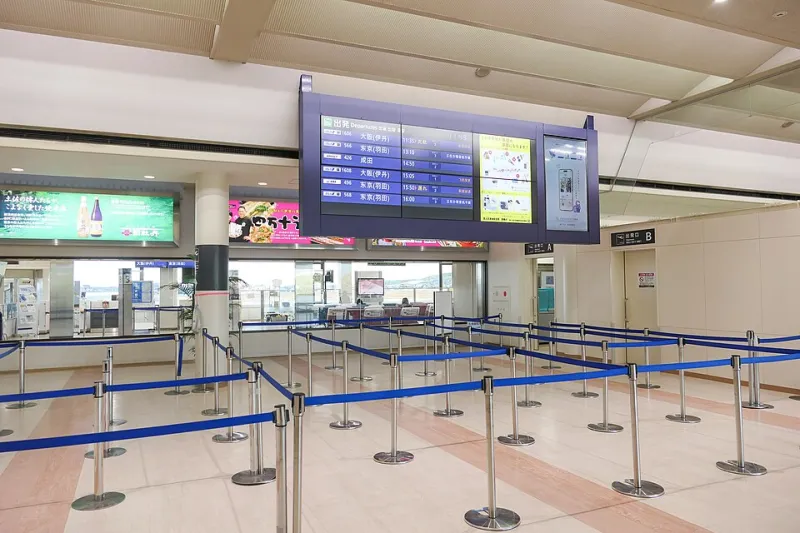
Photo: MaedaAkihiko, CC0, via Wikimedia Commons
The Checkpoint as a Research Site
More than two million passengers pass through Transportation Security Administration checkpoints on a typical day in the United States. For most, the encounter lasts under ten minutes; for some, it becomes a lasting experience of exposure, delay, or exclusion. Because participation is effectively mandatory for air travel, the checkpoint constitutes one of the most broadly shared, and least voluntary, interactions between citizens and the administrative state.
Yet the academic literature on screening remains fragmented across criminology, human factors research, privacy scholarship, and public health. This review consolidates five empirical findings from recent peer-reviewed work and, for each, identifies the reform the evidence most directly supports. The methodological lesson is as important as the substantive one: each study demonstrates how researchers can operationalize dignity and rights in settings where those concepts are rarely measured.
Finding 1: Algorithmic Risk Targeting Produces Disparate Flagging
Studies analyzing the TSA's risk-based targeting systems have found that algorithmic designations of elevated risk correlate with nationality, travel history, and identity-document anomalies in ways that extend well beyond threat indicators. Researchers using administrative data and freedom-of-information requests have documented that watchlist and pre-check mismatches fall disproportionately on travelers with common names from particular regions — a false-positive burden borne almost entirely by specific communities.
The reform the evidence supports: published criteria and independent auditing of targeting algorithms, with documented error rates by demographic group. Several scholars argue that a statutory reporting requirement, modeled on existing fair-lending examinations, would impose little operational cost.
Finding 2: Pat-Down Procedures Are Experienced as Dignity Violations at Scale
Survey and interview research on passenger experiences of enhanced physical screening consistently finds that pat-downs — particularly of transgender travelers, people with medical devices, and survivors of trauma — are the single strongest predictor of negative screening experiences. One widely cited study of transgender air travelers found that a majority reported avoiding air travel altogether after a screening-related disclosure episode, a finding that reframes screening discomfort as a mobility restriction in the literal sense.
The reform the evidence supports: procedure redesign co-developed with affected communities, standardized training on gender-consistent screening, and a documented alternative to physical contact. Pilots of modified procedures at several large hubs suggest that dignity-preserving protocols need not extend screening times.
Finding 3: Facial Recognition Expands Surveillance Without Measured Consent
Field studies of biometric boarding at US airports have documented that enrollment is frequently presented as optional while functioning as mandatory in practice — signage is ambiguous, opt-out paths are unmarked, and staff are inconsistent in honoring refusals. Research on privacy perception further shows that most passengers do not understand what data is collected, how long it is retained, or with whom it is shared.
The reform the evidence supports: affirmative, informed consent standards with auditable opt-out rates. Methodologically, the field studies offer a template: observational audits at gates, comparing stated policy with observed practice, are inexpensive and replicable.
Finding 4: Queue Design Shapes Both Throughput and Perceived Fairness
Human factors research on checkpoint design demonstrates that wait-time variability — not merely duration — drives perceptions of arbitrary treatment. Passengers who experience unpredictable delays report lower trust in the screening process even when total wait times are shorter, a finding with implications for procedural-justice theory well beyond aviation.
The reform the evidence supports: transparent, real-time wait disclosure and appointment-based lanes, both of which have been piloted domestically and evaluated favorably in the literature.
Finding 5: Screening Failures Cluster Where Oversight Is Weakest
Covert testing research and inspector general reports, synthesized in peer-reviewed security studies, indicate that detection performance varies substantially across airports and shifts, with the weakest performance concentrated at checkpoints with the highest staff turnover. The finding complicates the trade-off between security rigor and passenger burden: the systems that most constrain travelers are not always the ones that most protect them.
The reform the evidence supports: performance-based staffing standards and routine publication of covert-test results, allowing researchers to link screening burden to measured effectiveness rather than to assumption.
Methodological Takeaways
For scholars, the checkpoint offers an unusually tractable research environment: high-frequency interactions, observable procedures, and administrative data that can be obtained through disclosure regimes. The studies summarized here share a common design logic — pairing observational or administrative data with measures of subjective experience — that other researchers studying mobility restrictions, from border crossings to parole geographies, can adapt.
For policymakers, the cumulative message is that dignity and effectiveness are not opposing demands. The empirical record suggests that the practices passengers experience as most degrading are frequently the least predictive of threat. A screening regime built on that evidence would move more people, respect more rights, and, on the current research, likely miss less.