Filed, Not Found Guilty: The Geographic Exile Created by Eviction Records

Photo: Cbaile19, CC0, via Wikimedia Commons
An eviction filing is not an eviction. In housing courts across the United States, a substantial share of cases filed by landlords are dismissed, settled without judgment, or resolved in the tenant's favor. Yet peer-reviewed research on tenant screening consistently finds that the initial docket entry — not the outcome — is what follows a renter through subsequent housing searches. The consequences are not merely individual. When screening algorithms weigh filings against prospective addresses, they can effectively exclude households from broad swaths of a metropolitan housing market, raising questions that sit squarely at the intersection of housing policy, administrative data governance, and freedom of movement.
The Filing as a Data Event
The modern screening apparatus begins at the courthouse. Civil filings are digitized, sold to commercial tenant-screening vendors, and aggregated into databases queried by landlords within seconds of a completed application. Studies of these systems document a structural asymmetry: a dismissed case carries little explanatory weight in an automated score, while the filing itself functions as a negative marker regardless of disposition.
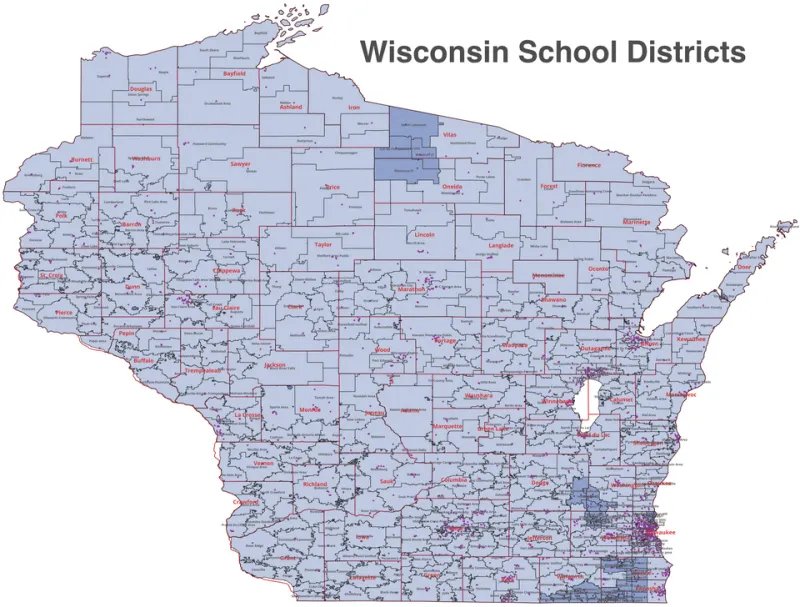
The geographic dimension is less visible but more consequential. Researchers have documented informal landlord networks and portfolio-level screening practices in which a filing — even one that occurred in a different county — flags a household when it applies within certain school districts or zip codes. Where large landlords coordinate through shared software platforms, a single adverse entry can propagate across dozens of properties. The practical effect resembles a radius: families report narrowing their searches to markets they believe will not surface the record, trading longer commutes, disrupted schooling, and distance from support networks for the possibility of approval.
Movement Restrictions Without an Order
From a mobility-rights standpoint, the mechanism is notable for what it lacks: no court has ordered the household to avoid a neighborhood, and no statute names any zip code off-limits. The restriction emerges from the interaction of public docket data, private scoring models, and landlord risk preferences. Scholars of administrative burden and algorithmic governance have described similar dynamics in other domains — the accumulation of individual decisions into a system of de facto exclusion that no single actor designed or is accountable for.
The empirical stakes are significant. Filing rates are concentrated among low-income households, and studies of eviction filings show they correlate strongly with poverty, disability, and caregiving status rather than with lease violations alone. A screening regime keyed to filings therefore distributes mobility restrictions along existing lines of disadvantage, in ways that affected households have little capacity to contest or even observe.
A Patchwork of Record-Sealing Regimes
State policy responses diverge sharply. Several jurisdictions — Connecticut, Illinois, Minnesota, and Nevada among them — have enacted automatic or near-automatic sealing of eviction filings, at least for cases that end without judgment. Others retain public records indefinitely, leaving tenants to pursue expungement through individual petitions that few complete. Early evaluations of automatic sealing report measurable improvements in subsequent rental approval without corresponding increases in landlord eviction filings, though the evidence base remains young and the studies vary in methodological rigor.
The interstate dimension compounds the problem. A sealed record in one state may still surface through a vendor's national database if reporting lags or if the sealing order is not transmitted downstream. Researchers studying record clearance in criminal law have documented analogous failures; there is little reason to believe housing data infrastructure performs better.
The Due Process Front
Litigation is beginning to test these practices. Plaintiffs in several federal actions have argued that screening reports containing dismissed or non-judgment filings mislead landlords in violation of the Fair Credit Reporting Act, and that denial without an adverse-action notice deprives applicants of any meaningful opportunity to correct the record. Commentators have framed a stronger claim: that automated exclusion based on unadjudicated filings implicates a liberty interest in residential choice that existing procedural safeguards do not accommodate.
Courts have not resolved these theories, and the doctrinal path is uncertain. But the litigation has already shifted attention to a question policymakers can act on now: whether a docket entry that never matured into a judgment should function as a portable, permanent, geography-spanning barrier at all.
An Agenda for Research
Three gaps deserve priority. First, systematic measurement of spatial exclusion — mapping where screened households actually move after denials — would convert anecdote into evidence. Second, comparative evaluation of sealing statutes is needed before the current wave of reforms hardens into an unexamined consensus. Third, audit studies of screening algorithms could establish whether dismissed filings are weighted as heavily in practice as critics contend.
The broader point for mobility scholarship is that movement restrictions no longer require border checkpoints or formal orders. They can be assembled from court data, scoring models, and the quiet discretion of landlords. Whether the law treats that assembly as ordinary market behavior or as a due process problem will shape the residential freedom of millions of American renters.