The Enrollment Address: Residency Verification and the Constitutional Limits of School Boundary Enforcement
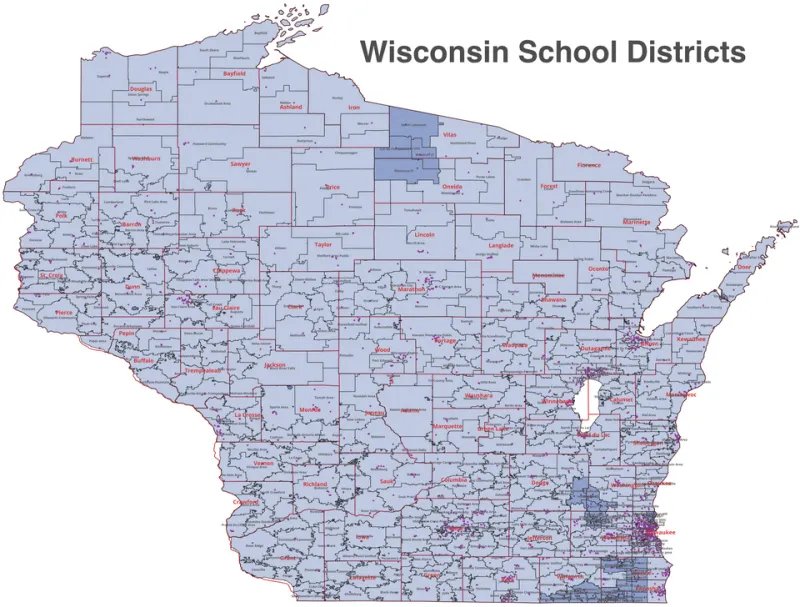
Photo: Wikideas1, CC0, via Wikimedia Commons
A Bureaucratic Question With Geographic Consequences
When a parent presents two utility bills and a lease at a school district enrollment office, the exchange appears routine. Yet the legal machinery behind that moment — residency verification — is among the least examined mobility restrictions in American public policy. For households with school-age children, the address on an enrollment form can determine whether a family may relocate to cheaper housing, accept a job in another county, or escape an unsafe living situation without forfeiting a child's educational continuity.
This article examines how residency rules operate as de facto restraints on movement, and what the empirical record suggests about reconciling district finance obligations with the practical liberty of families to choose where they live.
How Residency Rules Became Mobility Rules
Public education in the United States is financed substantially through local property taxes, and most states assign each child to a resident district. To protect that tax base, districts have adopted verification regimes: proof-of-occupancy requirements, home visits by enrollment investigators, notarized landlord affidavits, and in some jurisdictions, annual re-verification for flagged households.
The stated purpose is legitimate — preventing tuition fraud and capacity overload. But the enforcement architecture extends beyond the family that falsifies an address. It reaches every household that must demonstrate, on demand, that its housing arrangements conform to district expectations. Co-residence with relatives, doubled-up arrangements after eviction, and informal shared housing — common among lower-income families — are precisely the configurations verification regimes treat as presumptively suspect.
The Mobility Penalty in the Data
Housing research has long documented the school-district premium: identical homes command substantially higher prices on the desirable side of an attendance boundary. What has received less attention is the mobility penalty on the other side of the transaction. Families who own or rent within a high-performing district face steep losses if they move out — the loss of educational continuity functions as an implicit exit tax.
The consequences surface in several measurable patterns:
- Delayed exits from unaffordable housing. Families report remaining in units costing well above thirty percent of income because relocation would mean changing districts mid-year.
- Address misrepresentation. Studies of enforcement in metropolitan districts — including high-profile prosecutions in Ohio and Connecticut — found that the majority of families accused of enrollment fraud were not affluent boundary-crossers but households in precarious housing, often doubled up with relatives in the district they claimed.
- Differential enforcement. Investigations appear concentrated in districts serving higher-income populations, raising equity concerns about which families' living arrangements are scrutinized.
The Constitutional Terrain
Courts have addressed pieces of this puzzle. Plyler v. Doe established that undocumented children cannot be excluded from public schooling, and a line of cases affirming the right to interstate travel suggests that policies which penalize relocation warrant heightened scrutiny. Tuition-charging schemes for non-resident enrollment have survived challenge in some states and failed in others, with outcomes turning on whether the fee functioned as a reasonable cost recovery or a barrier to movement.
What remains unsettled is the middle ground: verification regimes that do not formally prohibit movement but raise the cost of moving so high that the choice becomes illusory for low-income households. A policy need not declare "you may not leave" to function as a restraint; it need only ensure that leaving costs a child her classroom, her teachers, and her peer network.
Policy Directions
Several reform models warrant consideration by state legislatures and district boards:
- Proportional verification. Reserve investigative measures — home visits, third-party database checks — for articulable suspicion rather than universal application.
- Expanded open enrollment with transportation funding. States such as Arizona and Minnesota demonstrate that boundary flexibility can coexist with stable finance if state aid follows the student.
- Housing-status protections. Following the federal McKinney-Vento framework, districts should codify that doubled-up and transitional living arrangements confer enrollment eligibility rather than trigger investigation.
- Decoupling enforcement from criminal process. Treating address disputes as civil administrative matters removes the prosecutorial exposure that falls hardest on families already in crisis.
Conclusion
Residency verification sits at the intersection of two legitimate public interests: fiscal stewardship of locally financed schools and the educational stability of children. But the current architecture resolves that tension in one direction, and the burden lands disproportionately on families with the least housing security. A rights-consistent framework would treat a family's choice of residence as exactly what it is — a decision about housing and work and safety — rather than a claim requiring proof before a child may open a textbook. Policymakers who take mobility seriously must include the enrollment office among the institutions that either protect or restrict it.