Arrears at the Border: Due Process and the Federal Passport Denial Regime
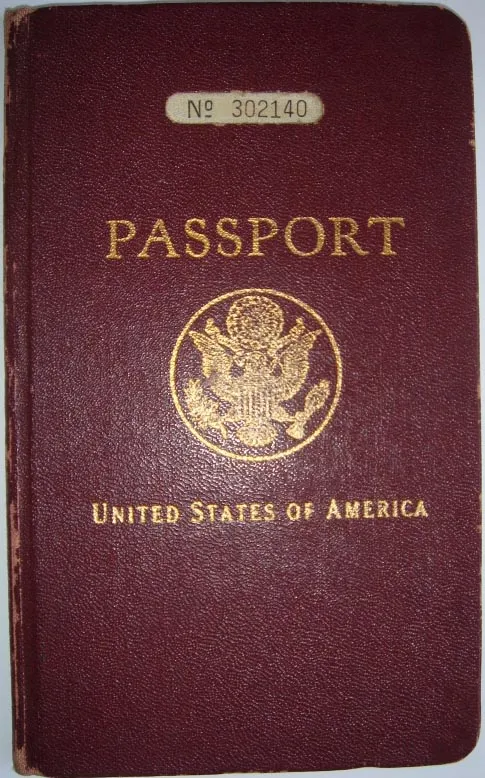
Photo: Edwardx, Public domain, via Wikimedia Commons
The Statute and Its Reach
Under 42 U.S.C. § 652(k), the State Department must deny passport issuance to individuals certified by the federal Office of Child Support Enforcement as owing more than $2,500 in arrears. Certification is largely automatic: state child support agencies report arrears to the federal case registry, and the denial follows without notice, hearing, or individualized finding of willfulness. In fiscal year data, tens of thousands of denials and revocations have been recorded annually, making this among the largest administrative movement-restriction regimes in the country.
What Empirical Studies Measure — and What They Miss
The methodological record deserves scrutiny. Studies cited in support of passport denial typically measure aggregate arrears reduction among certified populations, comparing pre- and post-denial payment patterns. But such designs face a selection problem: individuals seeking passports are, by definition, attempting international travel, employment abroad, or family reunification — activities that generate income. Payment increases after denial may reflect the threat's salience among motivated payers, while telling us little about the many certified individuals who never sought a passport and whose arrears stem from unemployment, incarceration, or disability.
Few studies employ credible counterfactuals. Randomized or quasi-experimental evaluation of passport denial as a collection tool is essentially absent from the literature, a striking gap for a policy affecting a population that is overwhelmingly low-income. Researchers seeking to close it would need state-level administrative panels linking certification events to payment trajectories, with careful attention to regression discontinuity around the $2,500 threshold — a threshold that, notably, has never been adjusted for inflation since its 1990s-era establishment, pulling an ever-larger share of obligors into scope.
The Constitutional Questions
The Supreme Court has not squarely addressed passport denial for civil debt. Lower decisions have generally upheld the statute under the rational-basis framework, reasoning that a passport is not itself a constitutional entitlement. Yet the practice raises questions familiar from other debt-based mobility sanctions: the absence of pre-deprivation process, the difficulty of contesting erroneous arrears figures, and the disparate impact on obligors in states with aggressive enforcement and those with limited ability to seek modification of orders.
The historical echo is hard to ignore. Restrictions on movement tied to unpaid obligations — from vagrancy statutes to debtor's prison — have repeatedly been repudiated in American law. Whether passport denial belongs in that lineage or is a legitimate enforcement lever is, at bottom, an empirical as much as a doctrinal question, and one the research community has not yet answered with the rigor it demands.
A Research Agenda for Reform
Three methodological priorities follow. First, threshold analysis: does the unadjusted $2,500 line capture willful nonpayment, or has inflation converted it into a broad net? Second, heterogeneity studies distinguishing outcomes for obligors with earnings capacity from those without. Third, process tracing of administrative remedies — how many certified individuals successfully obtain clearance, and how long does it take?
Until such evidence exists, the passport denial regime rests on thin empirical ground and thinner procedural safeguards. For scholars of mobility and rights, it represents an underexamined case study in how administrative data systems can silently construct borders within the border.