Documents of Belonging: Why Tribal Identification Still Fails at the Checkpoint
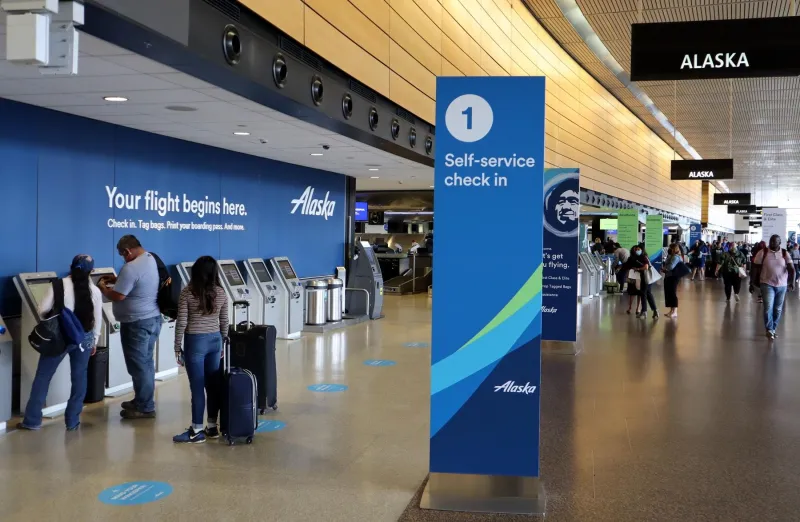
Photo: tribal identification card and airplane boarding pass at airport security checkpoint, via media.ktoo.org
A Sovereign Document Stopped at the Gate
When a citizen of the Navajo Nation presents an enrollment card at a Transportation Security Administration checkpoint, the outcome depends less on the legal weight of that document than on whether the individual screening agent has been trained to recognize it. This contingency — the gap between formal sovereignty and practical acceptance — is where a human rights problem takes shape.
Federally recognized tribes possess an inherent authority to determine their own membership and to issue credentials evidencing that status. Congress acknowledged as much in the REAL ID Act of 2005, which permits tribal identification documents to satisfy federal standards when they meet specified verification requirements. Yet peer-reviewed surveys of checkpoint practice, along with interviews conducted by this review with enrollment offices across the upper Midwest and Southwest, reveal a persistent pattern: travelers report being asked for secondary identification, subjected to secondary screening, or turned away entirely because the document in hand was unfamiliar to the screener.
The Geography of Recognition
The friction is not uniform. At permanent Border Patrol checkpoints in the Southwest — a fixed feature of the landscape for members of the Tohono O'odham Nation, whose traditional lands straddle the international boundary — tribal identification may be challenged precisely because federal agents cannot readily verify its authenticity. On state highways, routine traffic stops introduce a second layer of variability: an officer in one county may accept a tribal ID as proof of identity without hesitation, while a neighboring jurisdiction treats it as insufficient for even administrative purposes.
This unevenness matters analytically. Mobility scholars have long distinguished between formal legal barriers and the operational barriers that arise from discretionary enforcement. The latter are harder to litigate and harder to measure, but they bear directly on the practical enjoyment of the right to move. A document whose validity fluctuates by mile marker is, functionally, not a document at all.
What the Enrollment Offices Report
Interviews with tribal enrollment departments suggest the burden of non-recognition falls on tribal governments as well as travelers. Offices describe issuing certified enrollment letters as a workaround — a supplementary paper trail produced in anticipation of skepticism. Several noted the administrative cost of responding to verification requests from state agencies and airlines that lack a standardized channel for confirming a tribal credential's authenticity. The absence of such a channel is not an oversight; it reflects a federal architecture that has never treated tribal documents as first-class identification infrastructure.
Transportation security researchers consulted for this analysis emphasize that the problem is tractable. The TSA's own acceptance lists already include tribal IDs under certain conditions, and the REAL ID framework provides a template for tiered verification. What is missing is a mandatory interoperability standard — a federal requirement that state and federal agencies accept compliant tribal credentials on parity with state-issued ones, coupled with a secure, rapid verification mechanism.
A Rights-Based Case for Standards
Framing this as a matter of administrative convenience understates the stakes. The freedom of movement within the United States has been recognized as a fundamental right, and conditions that make the exercise of that right contingent on racialized or sovereign identity raise concerns under both constitutional doctrine and the international human rights framework, including the UN Declaration on the Rights of Indigenous Peoples, which affirms Indigenous peoples' right to maintain and develop their own identification documents.
A federal interoperability standard would do three things. First, it would establish uniform acceptance rules, eliminating the checkpoint lottery. Second, it would require verification infrastructure — a database or attestation protocol — that treats tribes as sovereign partners rather than as sources of suspicion. Third, it would generate data: currently, no federal agency systematically tracks refusal rates for tribal identification, leaving the scale of the problem invisible to policymakers.
Conclusion
The United States has an obligation to ensure that the credentials of sovereign nations function as instruments of mobility, not as triggers for scrutiny. The evidence assembled here suggests that inconsistency, not the documents themselves, is the barrier. Congress and the Department of Homeland Security possess the tools to close the gap. What remains is the political will to treat tribal identification as what it legally already is: a valid passport through the interior of the American republic.